web designer

Friday, September 18, 2009

Dwijendralal Roy, (1863-1913) Great Indians: Personalities

Bhim Rao Ambedkar


Dwijendralal Roy, (1863-1913) was a writer, dramatist and lyricist, was born on 19 July 1863 at Krishnanagar in Nadia.


His father was Kartikeya Chandra Roy, mother was Prasannamayee Devi.Dwijendralal passed the graduation from Hoogli College in 1883 and achieved his MA degree from Presidency


College. Then he went to London and achieved FRAS in farming and the MRAC and MRAS from the Royal Agriculture College and Agricultural Society. Coming back to India he was selected as a deputy magistrate in Dinajpur.

In 1905 Dwijendralal founded a literary society, named Purnima Milon, in Kolkata. He was the editor of the journal BHARATVARSA in 1913. Aryagatha (part 2, 1894), Hasir Gan (1900), Mandra (1902), Alekhya (1907), and Triveni (1912) are his famous collections of work of poems and songs. His drawings and satires comprise Ekghare (1889), Samaj Bibhrat O Kalki Avatar (1895), Tryahasparsha (1900), Prayashchitta (1902), and Punarjanma (1911).


He was also a playwright and amongst his mythological dramas are Pasani (1900), Sita (1908) and Visma (1914). His societal theaters are Parapare (1912) and Banganari (1916) and chronological plays: Tarabai (1903), Rana Pratapsingh (1905), Mebar Patan (1908), Nurjahan (1908), Sajahan (1909) and Chandragupta (1911). He was also a renowned creator of modern songs; which is known as Dwijendragiti.


Dwijendragiti consists of five hundred songs on various themes. The anti-British movement motivated him to compose patriotic songs for his native land. Two of his most famous songs, enthused by nationalism are ‘Dhana Dhanya Pushpa Bhara’ and ‘Banga Amar Janani Amar’. Dwijendralal's songs, exemplified by reality, splendor and joyfulness, have turn into an essential ingredient of the Bengali custom.


Dwijendralal has been considered as one of the prominent litterateurs and renowned Indian playwright of India. This great personality had died on17 May 1913 in Kolkata, but still now admired and respected for his sheer dedication to the Bengali literature and indirect participation in the freedom movement.


SARDAR PATEL


India's Man of Steel. He used to earn thousands of rupees every month as a lawyer. But he gave up his practice inorder to fight for the freedom of the country. As a leader of the farmers he forced the mighty British Government to accept defeat. He was sent to prison. As the Deputy Prime Minister of free India, he brought about the merger of hundreds of princely states with the Indian Union, and became the architect of the integrity of India. Honest in word and deed, he was a hero among heroes, a lion among men.

Author - Shivaramu

Sardar Patel

Sardar Vallabhbhai Patel was known in India as the 'Man of Steel'.


Vallabhbhai was born in Nadiad. It was a small village in Gujarat. His father was Jhaverbhai Patel, and his mother Ladbai. Jhaverbhai was a poor farmer. He was a strong and sturdy man. His country and freedom were as dear to him as his own life. In 1857 the people of India fought for their freedom. Jhaverbhai, who was then a
young man, fought bravely at that time. Vithalbhai, Vallabhbhai's elder brother, was also a well-known patriot. He was the Chairman of the Indian Legislative Council.

Once, when he was a small boy,Vallahbhai suffered from a boil in the armpit. There was a man in the village who used to cure boils by touching them with hot iron. The boy went to him. The man heated the iron rod till it grew red. But he hesitated, seeing at the boy's tender years.

"What are you waiting for? The iron will grow cold. Hurry up, brand the boil," said the boy angrily.

The man was even more frightened. The boy picked up the glowing rod and burnt the boil. Those who watched him were shocked and screamed. But there was not even a trace of pain in the boy's face.

The Courageous Student

This amazing boy was born on the 31st of October 1875. (This is the date generally accepted.) The elders were filled with pride and joy at the fearlessness of the little boy; the younger ones loved and admired him. No companion of his ever disobeyed him. By nature he rebelled against injustice. He showed a genuine interest in the welfare of his companions, constantly Enquirer about their needs and problems helped them as best he could, and promoted friendship and unity.

Vallabhbhai's early education was in Karamsad. Then he joined a school in Petlad. After two years he joined a high school in a town called Nadiad. A teacher of this school used to sell the books,which the pupils needed. He used to force all the pupils to buy books only from him. If any boy bought books from others, the teacher used to tease him.Vallabhbhai thought that this was wrong. He spoke to his companions, and saw to it that not a single pupil attended the classes. For a whole week the school could not work. The teacher had to correct himself.

When he was in Petlad he used to cook for himself. Every week he used to carry provisions from home, walking the entire distance. He could have gone by train, but he did not have the money to buy a ticket.

During his school days, one day a teacher made a mistake in working a sum. Vallabh- bhai pointed out the error. The teacher was very angry and said, "All right, you be the teacher." The boy replied, "Very well, sir." He worked the sum correctly, and sat down in the teacher's chair!

Vallabhbhai first chose Sanskrit. Then he changed to Gujarati. Sanskrit was dearer to the teacher who taught Gujarati than his own subject. When Vallabhbhai entered his class, the teacher wanted to taunt him, and said, "Welcome, great man!" Poor man, he did not know that the boy would one day become a very great man.

He asked the boy, in anger, "Why did you give up Sanskrit and choose Gujarati?"

Vallabhbhai answered, "If every one chooses Sanskrit, you will have no work."

The teacher was in a rage. He complained to the headmaster. Vallabhbhai narrated to the headmaster all that had happened. The headmaster said, "I have not seen such a bold pupil." This made the teacher even more bitter. Vallabhbhai, too, did not wish to remain in that school. He went back. He studied at home and passed the examination.

Timeline leading to Partition (The Partition of India )

1858- The India Act: power transferred to British Government.

1885- Indian National Congress founded by Allen. O. Hume to unite all Indians and strengthen bonds with Britain.

1905- First Partition of Bengal for administrative purposes. Gives the Muslims a majority in that state.

1906- All India Muslim League founded to promote Muslim political interests.

1909-Revocation of Partition of Bengal. Creates anti-British and anti-Hindu sentiments among Muslims as they lose their majority in East Bengal.

1916-Lucknow Pact. The Congress and the League unite in demand for greater self-government. It is denied by the British.

1919- Amritsar Massacre. General Dyer opens fire on 20,000 unarmed Indian civilians at a political demonstration Congress and the League lose faith in the British.

1919-Montagu-Chelmsford Reforms (implemented in 1921). Communal representation institutionalised for the first timeas reserved legislative seats are allocated for significant minorities.

1920-Gandhi launches a non-violent, non-cooperation movement, or Satyagraha, against the British for a free India.

1929-Congress calls for full independence.

1930-Dr. Allama Iqbal, a poet-politician, calls for a separate homeland for the Muslims at the Allahabad session of the Muslim League. Gandhi starts Civil Disobedience Movement against the Salt Laws by which the British had a monopoly over production and sale of salt.

1930-31-The Round Table conferences, set up to consider Dominion status for India. They fail because of non-attendance by the Congress and because Gandhi, who does attend, claims he is the only representative of all of India.

1931- Irwin-Gandhi Pact, which concedes to Gandhi's demands at the Round Table conferences and further isolates Muslim League from the Congress and the British.

1935-Government of India Act: proposes a federal India of political provinces with elected local governments but British control over foreign policy and defence.

1937-Elections. Congress gains majority.

1940- Jinnah calls for establishment of Pakistan in an independent and partitioned India.

1942-Cripps Mission o India, to conduct negotiations between all political parties and to set up a cabinet government. Congress adopts Quit India Resolution, to rid India of British rule. Congress leaders arrested for obstructing war effort.

1942-43-Muslim League gains more power: ministries formed in Sind, Bengal and North-West Frontier Province and greater influence in the Punjab.

1944-Gandhi released from prison. Unsuccessful Gandhi-Jinnah talks, but Muslims see this as an acknowledgment that Jinnah represents all Indian Muslims.

1946-Muslim League participates in Interim Government that is set up according to the Cabinet Mission Plan.

1947-Announcement of Lord Mountbatten's plan for partition of India, 3 June. Partition of India and Pakistan, 15 August. Radcliffe Award of boundaries of the nations, 16 August.

1971-East Pakistan separates from West Pakistan and Bangladesh is born.

India Pakistan Wars

India Pakistan wars : The first test for the Indian armed forces came shortly after independence with the first Indo-Pakistani conflict (1947-48). The military was called upon to defend the borders of the state of Jammu and Kashmir when tribals--principally Pathans--attacked from the northwest reaches of Kashmir on October 22, 1947. India's 161st Infantry Brigade was deployed and thwarted the advance of the tribal forces. In early November 1947, the 161st counterattacked and successfully broke through the enemy defenses. Despite early successes, the Indian army suffered a setback in December because of logistical problems. The problems enabled the forces of Azad Kashmir (Free Kashmir, as the part of Kashmir under Pakistani control is called) to take the initiative and force the Indian troops to retreat from the border areas. In the spring of 1948, the Indian side mounted another offensive to retake some of the ground that it had lost. No doubt fearing that the war might move into Pakistan proper, regular units of the Pakistani army became more actively involved. As the conflict escalated, the Indian leadership was quick to recognize that the war could not be brought to a close unless Pakistani support for the Azad Kashmir forces could be stopped. Accordingly, on the advice of Governor General Earl Louis Mountbatten (Britain's last viceroy in India in 1947 and governor general of India, 1947-48), the Indian government sought United Nations (UN) mediation of the conflict on December 31, 1947. There was some opposition to this move within the cabinet by those who did not agree with referring the Kashmir dispute to the UN. The UN mediation process brought the war to a close on January 1, 1949. In all, 1,500 soldiers died on each side during the war.

The second Indo-Pakistani conflict (1965) was also fought over Kashmir and started without a formal declaration of war. It is widely accepted that the war began with the infiltration of Pakistani-controlled guerrillas into Indian Kashmir on about August 5, 1965. Skirmishes with Indian forces started as early as August 6 or 7, and the first major engagement between the regular armed forces of the two sides took place on August 14. The next day, Indian forces scored a major victory after a prolonged artillery barrage and captured three important mountain positions in the northern sector. Later in the month, the Pakistanis counterattacked, moving concentrations near Tithwal, Uri, and Punch. Their move, in turn, provoked a powerful Indian thrust into Azad Kashmir. Other Indian forces captured a number of strategic mountain positions and eventually took the key Haji Pir Pass, eight kilometers inside Pakistani territory.

The Indian gains led to a major Pakistani counterattack on September 1 in the southern sector, in Punjab, where Indian forces were caught unprepared and suffered heavy losses. The sheer strength of the Pakistani thrust, which was spearheaded by seventy tanks and two infantry brigades, led Indian commanders to call in air support. Pakistan retaliated on September 2 with its own air strikes in both Kashmir and Punjab. The war was at the point of stalemate when the UN Security Council unanimously passed a resolution on September 20 that called for a cease-fire. New Delhi accepted the cease-fire resolution on September 21 and Islamabad on September 22, and the war ended on September 23. The Indian side lost 3,000 while the Pakistani side suffered 3,800 battlefield deaths. The Soviet-brokered Tashkent Declaration was signed on January 10, 1966. It required that both sides withdraw by February 26, 1966, to positions held prior to August 5, 1965, and observe the cease-fire line agreed to on June 30, 1965.

The origins of the third Indo-Pakistani conflict (1971) were different from the previous conflicts. The Pakistani failure to accommodate demands for autonomy in East Pakistan in 1970 led to secessionist demands in 1971 (see The Rise of Indira Gandhi, ch. 1). In March 1971, Pakistan's armed forces launched a fierce campaign to suppress the resistance movement that had emerged but encountered unexpected mass defections among East Pakistani soldiers and police. The Pakistani forces regrouped and reasserted their authority over most of East Pakistan by May.

As a result of these military actions, thousands of East Pakistanis died at the hands of the Pakistani army. Resistance fighters and nearly 10 million refugees fled to sanctuary in West Bengal, the adjacent Indian state. By midsummer, the Indian leadership, in the absence of a political solution to the East Pakistan crisis, had fashioned a strategy designed to assist the establishment of the independent nation of Bangladesh. As part of this strategy, in August 1971, India signed a twenty-year Treaty of Peace, Friendship, and Cooperation with the Soviet Union. One of the treaty's clauses implied that each nation was expected to come to the assistance of the other in the event of a threat to national security such as that occurring in the 1965 war with Pakistan. Simultaneously, India organized, trained, and provided sanctuary to the Mukti Bahini (meaning Liberation Force in Bengali), the East Pakistani armed resistance fighters.

Unable to deter India's activities in the eastern sector, on December 3, 1971, Pakistan launched an air attack in the western sector on a number of Indian airfields, including Ambala in Haryana, Amritsar in Punjab, and Udhampur in Jammu and Kashmir. The attacks did not succeed in inflicting substantial damage. The Indian air force retaliated the next day and quickly achieved air superiority. On the ground, the strategy in the eastern sector marked a significant departure from previous Indian battle plans and tactics, which had emphasized set-piece battles and slow advances. The strategy adopted was a swift, three-pronged assault of nine infantry divisions with attached armored units and close air support that rapidly converged on Dhaka, the capital of East Pakistan. Lieutenant General Sagat Singh, who commanded the eighth, twenty-third, and fifty-seventh divisions, led the Indian thrust into East Pakistan. As these forces attacked Pakistani formations, the Indian air force rapidly destroyed the small air contingent in East Pakistan and put the Dhaka airfield out of commission. In the meantime, the Indian navy effectively blockaded East Pakistan. Dhaka fell to combined Indian and Mukti Bahini forces on December 16, bringing a quick end to the war.

Action in the western sector was divided into four segments, from the cease-fire line in Jammu and Kashmir to the marshes of the Rann of Kutch in northwestern Gujarat. On the evening of December 3, the Pakistani army launched ground operations in Kashmir and Punjab. It also started an armored operation in Rajasthan. In Kashmir, the operations were concentrated on two key points, Punch and Chhamb. The Chhamb area witnessed a particularly intense battle where the Pakistanis forced the Indians to withdraw from their positions. In other parts of Kashmir, the Indians made some small gains along the cease-fire line. The major Indian counteroffensive came in the Sialkot-Shakargarh area south and west of Chhamb. There, two Pakistani tank regiments, equipped with United States-made Patton tanks, confronted the Indian First Armored Corps, which had British Centurion tanks. In what proved to be the largest tank battle of the war, both sides suffered considerable casualties.

Though the Indian conduct of the land war on the western front was somewhat timid, the role of the Indian air force was both extensive and daring. During the fourteen-day war, the air force's Western Command conducted some 4,000 sorties. There was little retaliation by Pakistan's air force, partly because of the paucity of non-Bengali technical personnel. Additionally, this lack of retaliation reflected the deliberate decision of the Pakistan Air Force headquarters to conserve its forces because of heavy losses incurred in the early days of the war.

LEARN ABOUT ANCIENT INDIA KINGDOMS, INDIAN RULERS & ANCIENT INDIAN EMPIRES

From their original settlements in the Punjab region, the Aryans gradually began to penetrate eastward, clearing dense forests and establishing "tribal" settlements along the Ganga & Yamuna ( Jamuna ) plains between 1500 and ca. 800 B.C. By around 500 B.C., most of northern India was inhabited and had been brought under cultivation, facilitating the increasing knowledge of the use of iron implements, including ox-drawn plows, and spurred by the growing population that provided voluntary and forced labor.

As riverine and inland trade flourished, many towns along the Ganga became centers of trade, culture, and luxurious living. Increasing population and surplus production provided the bases for the emergence of independent states with fluid territorial boundaries over which disputes frequently arose.

The rudimentary administrative system headed by tribal chieftains was transformed by a number of regional republics or hereditary monarchies that devised ways to appropriate revenue and to conscript labor for expanding the areas of settlement and agriculture farther east and south, beyond the Narmada River. These emergent states collected revenue through officials, maintained armies, and built new cities and highways. By 600 B.C., sixteen such territorial powers--including the Magadha, Kosala, Kuru, and Gandhara--stretched across the North India plains from modern-day Afghanistan to Bangladesh. The right of a king to his throne, no matter how it was gained, was usually legitimized through elaborate sacrifice rituals and genealogies concocted by priests who ascribed to the king divine or superhuman origins.


The victory of good over evil is epitomized in the epic Ramayana (The Travels of Rama, or Ram in the preferred modern form), while another epic, Mahabharata (Great Battle of the Descendants of Bharata), spells out the concept of dharma and duty. More than 2,500 years later, Mohandas Karamchand (Mahatma) Gandhi, the father of modern India, used these concepts in the fight for independence (see Mahatma Gandhi, this ch.).

The Mahabharata records the feud between Aryan cousins that culminated in an epic battle in which both gods and mortals from many lands allegedly fought to the death, and the Ramayana recounts the kidnapping of Sita, Rama's wife, by Ravana, a demonic king of Lanka (Sri Lanka), her rescue by her husband (aided by his animal allies), and Rama's coronation, leading to a period of prosperity and justice.


In the late twentieth century, these epics remain dear to the hearts of Hindus and are commonly read and enacted in many settings. In the 1980s and 1990s, Ram's story has been exploited by Hindu militants and politicians to gain power, and the much disputed Ramjanmabhumi, the birth site of Ram, has become an extremely sensitive communal issue, potentially pitting Hindu majority against Muslim minority (see Public Worship, ch. 3; Political Issues, ch. 8). Indian Kingdom page.Library of congress 1995

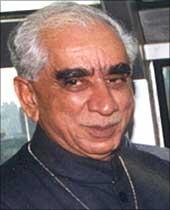
Nehru, Patel conceded Pak to Jinnah: Jaswant Singh

Nehru, Patel conceded Pak to Jinnah: Jaswant Singh


Mohammed Ali Jinnah did not win Pakistan as Congress leaders Jawaharlal Nehru [ Images ] and Sardar Vallabhbhai Patel 'conceded' Pakistan to the Quaid-e-Azam, with the British acting as an ever helpful midwife, claims senior Bharatiya Janata Party [ Images ] leader Jaswant Singh [ Images ].

In his new book Jinnah - India, Partition, Independence, which will hit the stands on August 17, he recalls the events leading to the Partition as well as the "epic journey of Jinnah from being the ambassador of Hindu-Muslim unity, the liberal constitutionalist and Indian nationalist to the Quaid-e-Azam of Pakistan".

Singh raises several questions on partition. "How did you divide a geographic (also geo-political) unity? Through a 'surgical operation', Mountbatten (the last British viceroy) had said, and tragically Nehru and Patel and the Congress party had assented," he writes in the book, excerpts from which have been reproduced by India Today magazine.

"...Jinnah did not win Pakistan, as the Congress leaders -- Nehru and Patel finally conceded Pakistan to Jinnah, with the British acting as an ever helpful midwife," Singh says in his 669-page book.

"The cruel truth is that this partitioning of India has actually resulted in achieving the very reverse of the originally intended purpose; partition, instead of settling contention between communities has left us a legacy of markedly enhanced Hindu, Muslim, Sikh or other such denominational identities, hence differences...," the book says.

Singh describes the partition of India as the "defining event of the 20th century for this entire subcontinent. The searing agony of it torments still, the whys and what-fors of it, too. We relieve the partition because we persist without attempts to find answers to the great errors of those years so that we may never, ever repeat them. Also, perhaps by recounting them we attempt to assuage some of our pain".

According to Singh, both Jinnah and Nehru wanted special status for Muslims. "It is ironical that among the great constitutionalists of those times, Jinnah and Nehru became the principal promoters of 'special status for Muslims'; Jinnah directly and Nehru indirectly".

"The irony of it is galling when sadly, we observe that both of them, these two great Indians of their times, were either actually or in effect competing to become the 'spokesman of Muslims' in India," writes the former external affairs minister.


Free-eBooks

A New Earth and A New Universe
Philosophy, by Rodney Bartlett

The basic idea is that we live in a universal unification where there is no solidity or separation as we understand it between any physical or nonphysical entities on Earth, in space or time. This idea grew from physics' belief in universal unification as well as experiments in quantum mechanics and could change science, medicine, religion, economic systems, and create world peace and time travel.

How to Get More Cutomers: The P.U.M.P. Marketing System
Business, by Martin Wales

If you want more customers & clients then you can handle, check out The P.U.M.P. Marketing System. Grab ideas for FREE and No-Cost + Low Cost Sales & Marketing Strategies and Tactics from its 194 pgs of pure content gold. Use step-by-step, proven methods for increasing your credibility and your CASH flow today! Discover how to build your success FAST without busting the budget! Why wait? Read now!

Help for Anxiety, Phobias, OCD and Depression
Health, by Terry Dixon

A unique insight into anxiety disorders and depression.
First Book of Adam and Eve
Religious, by Rutherford Platt

The First Book of Adam and Eve details the life and times of Adam and Eve after they were expelled from the garden to the time that Cain kills his brother Abel. It tells of Adam and Eve's first dwelling - the Cave of Treasures; their trials and temptations; Satan's many apparitions to them; the birth of Cain, Abel, and their twin sisters; and Cain's love for his beautiful twin sister, Luluwa, whom Adam and Eve wished to join to Abel.

Coma
Humor, by Tom Hayes

John West has it all ... a beautful girl, a great job he loves, a wonderful life. But is it all just a hallucination? After six years in a coma, John wakes up to find his beautiful life swept away in a storm of experimental drugs, and he has no recollection of his pre-coma existence. His choice is clear: stay in a drab world not of his making and beyond his control, or return to his happy life in the "other" world. Coma is a comedy that challenges our everyday conceptions of reality, god, love, George Bush and other illusions

Illusion of Luck
Fiction, by Robert Burton Robinson

As Greg Tenorly was about to marry the woman of his dreams, he figured he was the luckiest man in the world. Until he got an anonymous phone call warning him about his bride's shady past.

The Evil Genius
Mystery, By Wilkie Collins

"The Evil Genius" is the story of divorce and remarriage, unfaithfulness, but above all, children battered helplessly on the storms of their parents' passions.
Breakthrough Technology To Rake In Online Profits
Sponsored Listing

'Steal' customer leads, sales and generate massive profits from Twitter, eBay and Google in 3 minutes or less. No product or website needed!
Newsletter Information

To read more books please go to: http://www.Free-eBooks.net

You are receiving this newsletter because you are a registered member of
www.Free-eBooks.net.

If you no longer wish to receive it, simply click the link below to unsubscribe.

Free-eBooks.net is a Paradise Publishers Inc. website

Philosophy, by Rodney Bartlett

The basic idea is that we live in a universal unification where there is no solidity or separation as we understand it between any physical or nonphysical entities on Earth, in space or time. This idea grew from physics' belief in universal unification as well as experiments in quantum mechanics and could change science, medicine, religion, economic systems, and create world peace and time travel.
How to Get More Cutomers: The P.U.M.P. Marketing System
Business, by Martin Wales

If you want more customers & clients then you can handle, check out The P.U.M.P. Marketing System. Grab ideas for FREE and No-Cost + Low Cost Sales & Marketing Strategies and Tactics from its 194 pgs of pure content gold. Use step-by-step, proven methods for increasing your credibility and your CASH flow today! Discover how to build your success FAST without busting the budget! Why wait? Read now!

Help for Anxiety, Phobias, OCD and Depression
Health, by Terry Dixon

A unique insight into anxiety disorders and depression.

First Book of Adam and Eve
Religious, by Rutherford Platt

The First Book of Adam and Eve details the life and times of Adam and Eve after they were expelled from the garden to the time that Cain kills his brother Abel. It tells of Adam and Eve's first dwelling - the Cave of Treasures; their trials and temptations; Satan's many apparitions to them; the birth of Cain, Abel, and their twin sisters; and Cain's love for his beautiful twin sister, Luluwa, whom Adam and Eve wished to join to Abel.

Coma
Humor, by Tom Hayes

John West has it all ... a beautful girl, a great job he loves, a wonderful life. But is it all just a hallucination? After six years in a coma, John wakes up to find his beautiful life swept away in a storm of experimental drugs, and he has no recollection of his pre-coma existence. His choice is clear: stay in a drab world not of his making and beyond his control, or return to his happy life in the "other" world. Coma is a comedy that challenges our everyday conceptions of reality, god, love, George Bush and other illusions
Illusion of Luck
Fiction, by Robert Burton Robinson

As Greg Tenorly was about to marry the woman of his dreams, he figured he was the luckiest man in the world. Until he got an anonymous phone call warning him about his bride's shady past.
The Evil Genius
Mystery, By Wilkie Collins

"The Evil Genius" is the story of divorce and remarriage, unfaithfulness, but above all, children battered helplessly on the storms of their parents' passions.
Breakthrough Technology To Rake In Online Profits
Sponsored Listing

'Steal' customer leads, sales and generate massive profits from Twitter, eBay and Google in 3 minutes or less. No product or website needed!
Newsletter Information

To read more books please go to: http://www.Free-eBooks.net

You are receiving this newsletter because you are a registered member of
www.Free-eBooks.net.

If you no longer wish to receive it, simply click the link below to unsubscribe.

Free-eBooks.net is a Paradise Publishers Inc. website

Free-eBooks

Welcome to your Free-eBooks Newsletter.

As always you can download any of the books below at no charge simply by clicking its title.

Happy readings from your friends at Free-eBooks.net
Prophecy and End Times
Religion, by John Jones

A straight forward eBook on bible prophecy and end times that covers the major themes of biblical prophecy with a special focus on end times. Written from a clear bible believing perspective, this book seeks to make prophecy more approachable and also injects some fresh thinking into the subject along the way.
Press 1 For Pig Latin
Business, by Robert S. Swiatek

If you hear those 5 words, we’re sunk. This not a book about farm animals - it covers technological advances: cars, TV, bombs, the computer and telephone. Technology has failed us, giving us too many bad side effects to the people and the earth. Despite this, we have to fix it, since there are so many benefits. This book offers solutions to clean up the mess that the people themselves have made.
Vatican Conspiracy
Mystery, by Jonathan Cross

The first Jewish/American Pope, while praying is embedded with four names. Subsquently he finds that they are the names of four men: a U.S. Senator, a young parish Italian priest, the head of the Italian Mafia, and a covert military intelligence operative working as a high powered political consultant. The mission is to save the children from the world wide drug cartels. An added element: Angel.
Mom Letters
Humur, by Jack Brackitt

This comedy novel reports on a Chicago family’s life in one year. It’s funny, but not insipid. Well, maybe it's three percent insipid. Anyway, there’s a lot about living in Chicago -- what it’s like to ride an L train,walk through the Loop, eat at hole-in-the-wall restaurants, etc. If you like Chicago and kids, you’ll really like Mom Letters.
Amusements in Mathematics
Science, by Henry Ernest Dudeney

An unabridged and unaltered republication of the first edition except for the addition the note on british coins and stamps prepared for american readers.
The Woodlanders
Romance, by Thomas Hardy

In this classically simple tale of the disastrous impact of outside life on a secluded community in Dorset, Hardy narrates the rivalry for the hand of Grace Melbury between a simple and loyal woodlander and an exotic and sophisticated outsider.
All Is Mind
Psychology, By David Samuel

A practical way to sort out conflicts we experience daily. This book is about understanding the human mind and personality. Why do we do what we know is bad for us yet do not do what we know is good. What the basic nature of the mind is, how it came to be in its current condition and how any defects can be corrected for it to function according to its potential rather than sputter through life.
Newsletter Information

To read more books please go to: http://www.Free-eBooks.net

You are receiving this newsletter because you are a registered member of
www.Free-eBooks.net.

If you no longer wish to receive it, simply click the link below to unsubscribe.

Free-eBooks.net is a Paradise Publishers Inc. website

Paradise Publishers Inc
301 Thelma Drive #501
Casper WY 82609 USA


If you no longer wish to receive communication from us:
Cancel

To update your contact information:
Update